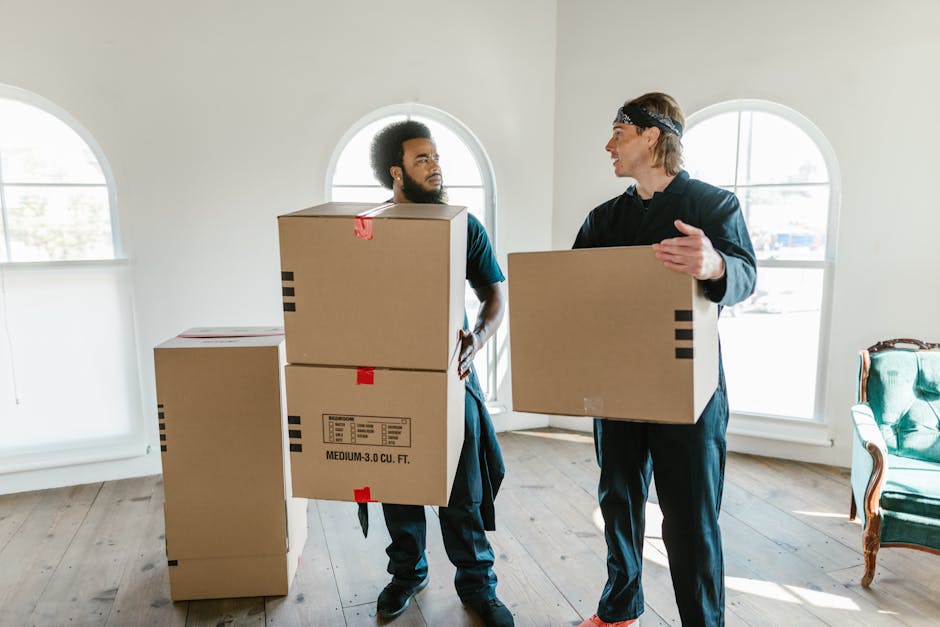
Commercial Removals for Cricklewood Shops and Offices

If you are planning Commercial Removals for Cricklewood Shops and Offices, chances are you are juggling more than boxes. There's stock to protect, staff to brief, customers to keep informed, and a clock that never seems to slow down. Truth be told, that is exactly why a good commercial move needs proper planning, not just a van and a hopeful smile.
Cricklewood brings its own set of moving realities too. Busy roads, tight loading spots, shared access, and the simple fact that retail or office downtime can cost money very quickly. This guide walks you through how commercial removals work, what makes them different from a standard house move, and how to keep the whole process calm, efficient, and controlled. Whether you are moving a shop unit, a small office, or a mixed-use workspace, you will find practical advice here that actually helps.
We will cover the benefits, the process, common mistakes, compliance issues, and a realistic step-by-step approach so you can make better decisions with fewer surprises. And yes, there is a checklist too. Because nobody enjoys discovering that the cable labels were left in the old drawer after the van has driven off.
Why Commercial Removals for Cricklewood Shops and Offices Matters
Commercial removals are not just about transport. They are about continuity. A shop that is shut for too long can lose footfall, walk-in sales, and momentum. An office that is half-packed and half-working tends to become a slightly awkward place to do anything useful. You know the feeling: the printer is somewhere, the internet is not quite connected, and someone has put the kettle in the wrong box.
In Cricklewood, practicalities matter even more. Local traffic patterns, narrow streets in some parts, and parking limitations can all affect the timing of a move. A well-run business relocation takes those pressures into account before moving day, not during it. That means thinking about access, lifting routes, timing windows, and how to keep staff and customers informed.
It also matters because different commercial premises have different priorities. A retail move may focus on stock, display units, and till systems. An office move may centre on IT equipment, documents, desks, and continuity for client work. A commercial removals plan should reflect the actual shape of the business, not a generic one-size-fits-all checklist.
Expert summary: the best commercial move is the one that feels almost boring on the day. No panic, no guessing, no frantic re-routing. Just clear steps, sensible packing, and a team that understands how to keep a business moving while the premises change around it.
If you are also comparing broader moving support, it can help to look at our commercial moves service alongside options such as office removals and removal services so you can match the move to the real needs of your premises.
How Commercial Removals for Cricklewood Shops and Offices Works
A commercial removal usually follows a structured sequence, even if the actual move is fairly small. The idea is to reduce disruption by planning the route from the current premises to the new one, item by item.
1. Pre-move assessment
The first stage is usually an assessment of what needs to go, what should be packed separately, and what may need specialist handling. A good mover will want to know about stairs, lifts, parking access, fragile goods, IT equipment, and any items that need disassembly. For shops, this might include shelving, stock, tills, POS hardware, and promotional displays. For offices, it often means desks, chairs, monitors, filing cabinets, and boxes of documentation.
2. Packing and preparation
Next comes packing. This is where a lot of commercial moves either go smoothly or become a bit messy. Proper labels, clear packing categories, and a sensible layout of boxes make a huge difference. In our experience, the more a business prepares before the van arrives, the less time gets lost on moving day.
Depending on the move, you may use specialist packing materials for electronics, glass shelving, confidential paperwork, or fragile retail stock. Some businesses also use professional packing and unpacking services to save time and keep things consistent.
3. Loading and transport
On moving day, items are loaded in a logical order so that the first things needed at the new premises are easier to unload. This sounds obvious, but it is one of those small things that saves a huge amount of stress later. A commercial move is rarely just about volume; it is about sequence.
Transport should be organised around access and timing. If the loading bay is tight, or if parking is limited on your street, the schedule may need to be adjusted. That is where local experience helps. A van parked in the wrong place for ten minutes can undo half an hour of good packing. Bit frustrating, that.
4. Delivery, placement, and setup
Once on site, the team unloads and places items according to the agreed layout. For offices, this may mean setting furniture in the right rooms and assembling basic items. For shops, it may involve positioning stock, fixtures, or back-of-house equipment so the reopening process is quicker. The goal is not just to deliver items. It is to make the new space workable.
5. Final checks and handover
A sensible move ends with a final walk-through. That means checking for anything left behind, confirming that nothing has been damaged, and making sure the essential items are where they should be. It is a small moment, but an important one. The move is not really finished until the space is usable again.
Key Benefits and Practical Advantages
There are plenty of reasons businesses choose professional commercial removals rather than trying to manage everything internally. Some are obvious, others only become clear after you have lived through a move once or twice.
- Less downtime: careful planning helps you reopen or resume work sooner.
- Better protection for stock and equipment: experienced handling reduces the risk of knocks, breakages, and misplaced items.
- More organised relocation: labelled boxes and planned loading save time at both ends.
- Reduced pressure on staff: your team can focus on customers and operations instead of carrying desks downstairs.
- Improved safety: trained movers know how to handle heavy, awkward, or fragile items safely.
- Local logistical knowledge: Cricklewood access issues, road layouts, and timing constraints can be factored into the move.
There is also a practical financial benefit that people sometimes miss. A move that is rushed, disorganised, or repeated because of missing items often costs more than a well-planned move from the outset. Let's face it, paying twice for confusion is nobody's favourite business expense.
For businesses that need a more flexible approach, a man and van option can be useful for smaller commercial loads or partial relocations. For larger or more complex projects, a dedicated removal company is often the better fit.
Who This Is For and When It Makes Sense
Commercial removals are suitable for a wide range of businesses, but the decision usually comes down to two things: how much needs moving, and how much disruption you can tolerate.
Retail shops
Shops in Cricklewood may need commercial removals when relocating to a larger unit, downsizing, refreshing the layout, or closing one site and reopening another. If you handle stock, display units, storage cages, POS systems, or shop furniture, a proper move plan saves time and protects inventory.
Offices and workspaces
Offices often need a move when they are expanding, consolidating teams, changing lease terms, or upgrading to a better location. Office removals tend to revolve around computers, desks, files, server-related equipment, and the simple challenge of making sure people can get back to work quickly. If your staff need to be productive the very next morning, that changes everything.
Startups and small businesses
Smaller companies sometimes assume they can manage a move without help. Sometimes they can. But if the team is already stretched, the move can become a distraction that drags on for days. A commercial move is often worth using when your staff time is better spent on revenue-generating work.
Mixed-use businesses
Some premises combine retail, storage, and admin functions. These moves can be slightly fiddly because different parts of the business have different priorities. In that case, the value of a clear plan becomes even more obvious.
When it makes sense to use professional help
- When there is bulky furniture or specialist equipment
- When your premises have tight access or parking constraints
- When you cannot afford lengthy downtime
- When items need careful packing or sequencing
- When staff should remain focused on operations rather than lifting and logistics
Sometimes the right choice is obvious. Other times it is a judgement call. If you are not sure, think about the cost of lost time, not just the cost of the move itself. That usually clears things up.
Step-by-Step Guidance
Here is a practical way to approach Commercial Removals for Cricklewood Shops and Offices without making it more complicated than it needs to be.
- List everything that needs to move. Separate stock, furniture, IT, fixtures, archive boxes, and any items that should stay behind.
- Decide what needs specialist handling. Fragile goods, screens, glass shelving, printers, or sensitive files may need extra care.
- Measure access at both locations. Check door widths, stairs, lift size, parking, and any loading restrictions.
- Set your move date and timing window. For some businesses, moving outside peak hours or over a quieter day can reduce disruption.
- Label everything clearly. Put room names, departments, or item categories on boxes and furniture tags.
- Back up digital systems. This matters especially for offices. Better safe than sorry, as they say.
- Prepare staff roles. One person should coordinate the move, not everyone at once shouting different instructions.
- Protect confidential materials. Use secure boxes or sealed containers for sensitive documents.
- Confirm the new layout. Decide where desks, stock areas, and equipment should go before the van arrives.
- Do a post-move check. Walk through both sites, confirm nothing is missing, and test the essentials.
A small but useful tip: keep one clearly marked box for immediate essentials. Think chargers, keys, access cards, tape, kettle items, basic tools, and a few stationery bits. That box can save a surprising amount of faff on the first day.
Expert Tips for Better Results
Experience tends to teach the same lesson in different ways: the best commercial moves are the ones where people have made decisions early. Here are a few things that genuinely help.
Build the move around business hours, not the other way round
For shops, try to avoid peak trading periods if possible. For offices, consider whether staff can work remotely for part of the move or return in staggered groups. That gives the move room to breathe. Rushing around customers or colleagues in the middle of a loading process is rarely elegant.
Use colour coding where practical
For office moves, colour-coded labels by department or floor can speed up unpacking. For shops, use labels that separate stock, fixtures, tills, and storage items. It sounds basic, but basic systems often work best.
Keep fragile and valuable items separate
This is especially important for electronics, point-of-sale equipment, specialist tools, and breakables. Do not assume everything can be thrown into the same box because it "should be fine." That phrase causes trouble. More often than people admit.
Think about the first day back
The move itself is only half the job. What do you need working immediately? A till system? One desktop PC? A phone line? If you plan for that first day, you are much less likely to end up with a room full of boxes and a business that cannot quite function yet.
Ask about insurance and handling process
Before you book, check how the mover handles breakables, loading, and transport risk. For commercial premises, it is sensible to review insurance and safety information and make sure your own cover is aligned with the job at hand.
Useful rule of thumb: if something would be awkward to replace, awkward to carry, or awkward to explain to the team on Monday morning, treat it as a priority item.
Common Mistakes to Avoid
A lot of moving problems are predictable. The good news is that most of them can be avoided with a bit of discipline and a clear plan.
- Leaving packing too late: last-minute packing leads to mixed boxes, missing items, and more stress.
- Ignoring access restrictions: a van that cannot park properly can slow the whole move down.
- Not telling staff what is happening: unclear communication creates confusion and delays.
- Forgetting IT and telecoms: phones, Wi-Fi, printers, and logins often take longer to sort than people expect.
- Moving without a layout plan: if nobody knows where things go, unpacking becomes a guessing game.
- Overestimating what can be done in one go: some moves need phased transport, not a heroic all-at-once effort.
- Skipping a final inventory: a simple checklist helps avoid missing boxes, keys, or documents.
One practical observation: businesses often remember the visible things-furniture, shelves, stock-while underestimating the invisible ones. Access cards, power leads, passwords, labels, and keys matter just as much. Sometimes more. You do not want to be standing in a new office with the right desk and no way to switch on the computer.
Tools, Resources and Recommendations
Good commercial removals depend on the right tools, but not necessarily fancy ones. Mostly, you need sensible preparation and the right materials.
- Sturdy boxes: use appropriate box sizes for stock, files, and office items.
- Labels and markers: clear handwriting beats vague descriptions every time.
- Protective wrapping: ideal for monitors, glass, decor, and fragile stock.
- Trolleys and dollies: useful for heavier office furniture and grouped items.
- Tool kits: needed for dismantling desks, shelving, and fittings.
- Floor protection: helpful if you are moving through finished or recently cleaned spaces.
- Inventory sheet: a simple list of items can save a lot of head-scratching later.
If you are comparing service levels, you may also want to look at moving van options, removal van capacity, or broader removals support depending on the size of your business move. For stock-heavy jobs or mixed commercial loads, the right vehicle choice can make a bigger difference than people expect.
It can also be useful to think about packing support as part of the job, not an extra afterthought. A move with some packing help often runs more smoothly simply because the boxes behave in a predictable way. Human beings? Not always. Boxes, at least, can be persuaded.
Law, Compliance, Standards, or Best Practice
Commercial removals in the UK should be handled with basic care around health and safety, property access, and the security of goods and documents. You do not need to turn the move into a legal project, but you do need to be sensible.
At a practical level, that means making sure walkways are kept clear, heavy items are lifted correctly, and equipment is packed so it does not create avoidable hazards. If staff are helping with the move, they should only be asked to do tasks that are appropriate and safe. Overloaded boxes, unstable stacking, and blocked access routes are all poor ideas. Common sense really does matter here.
Businesses should also think about confidentiality, especially if they are moving records, customer details, or financial files. Sensitive documents should be boxed and labelled carefully, and access should be limited to the right people. For office moves, it is worth treating paperwork and data-bearing equipment as priority items, not just miscellaneous clutter.
When reviewing a mover, it is sensible to check their approach to safety and liability. Our health and safety policy and terms and conditions outline the practical framework around service expectations, while privacy policy and payment and security information help with trust and admin clarity.
If the move involves waste, unwanted fixtures, or end-of-lease clear-out items, it is also smart to plan disposal properly. The wrong assumption here can create hassle later. Recycling, reuse, and lawful disposal all matter, particularly when offices or shops are shedding old furniture or surplus items. A little planning goes a long way.
Options, Methods, or Comparison Table
Not every commercial move needs the same approach. The right method depends on the size of the premises, how much equipment you have, and how much interruption you can tolerate.
| Move Option | Best For | Strengths | Watch Outs |
|---|---|---|---|
| Small van-based move | Small shops, startups, partial office loads | Flexible, efficient, often ideal for tighter access | Limited capacity, may need multiple runs |
| Dedicated commercial removal | Offices, medium shops, full relocations | More structured, better for organised sequencing | Requires clearer advance planning |
| Phased move | Businesses that cannot shut fully | Reduces downtime, allows continuity | Takes longer to coordinate |
| Hybrid approach | Mixed premises with stock and office items | Customisable and practical | Needs strong labelling and coordination |
In many Cricklewood business moves, a hybrid or phased approach works best. It keeps the business alive while the new site is being readied. That said, a very small business with just a few desks and some shelving might only need a straightforward van move. There is no prize for making it more complicated than necessary.
Case Study or Real-World Example
Here is a realistic example based on the sort of move people often need in the area.
A small retail and admin business near Cricklewood needed to relocate from a compact shop unit into a slightly larger mixed-use premises. The owner had stock on display, additional boxes in storage, two desks, a printer, and several freestanding shelves. The big concern was not the total volume. It was the timing. They wanted the old site cleared, the new site set up, and trading resumed with minimal disruption.
The move worked because it was broken into categories before moving day. Stock was separated from office gear, shelving was dismantled in advance, and one box was reserved for immediate essentials. The team also checked access at both sites, which was lucky really, because the new premises had a tighter loading angle than expected. If nobody had checked, it would have been one of those slightly awkward day-of surprises.
By evening, the essentials were in place, the main stock had been transferred, and the owner could start sorting the space for the next morning. Not everything was unpacked. That is normal. But the business was functional, which is the real goal.
The lesson? Commercial removals work best when the move is planned around what the business needs first, not around how many boxes can be pushed through a door in one afternoon.
Practical Checklist
Use this checklist before moving day. It keeps things grounded and helps prevent the usual last-minute scramble.
- Confirm the move date and time window
- Identify everything that is moving and everything that is not
- Label stock, files, furniture, and equipment clearly
- Back up IT systems and store passwords securely
- Arrange parking or loading access where possible
- Check whether any items need dismantling or specialist handling
- Prepare an essentials box for the first day
- Notify staff of their roles and schedule
- Protect confidential records and sensitive equipment
- Walk through both premises before and after the move
- Confirm utilities, internet, and access arrangements at the new site
- Keep emergency contact details handy during the move
Quick reminder: the smaller the business, the easier it is to assume "we'll manage it ourselves." Sometimes that is fine. Sometimes it is where little delays turn into a very long day. Be realistic. It saves headaches.
If you want a clearer view of costs before booking, you can review pricing and quotes and compare them with the scale of the job. That gives you a better basis for planning rather than relying on guesswork.
Conclusion
Commercial removals for Cricklewood shops and offices are really about one thing: keeping business disruption under control while everything changes around you. The move may last a day, a weekend, or a phased period, but the impact on your business can stretch much further if it is not handled well.
When you plan early, label properly, understand access constraints, and choose a service that fits the size and urgency of the job, the whole process becomes much easier. You are not just moving furniture. You are protecting time, continuity, and the day-to-day rhythm of your business.
If you are weighing up the next step, start with a clear inventory and a sensible quote comparison. That alone will tell you a great deal about how complex the move really is. And if there is one thing we know from plenty of real-world moves, it is this: a calm move usually begins well before the van arrives.
Get a free quote today and see how much you can save.
Frequently Asked Questions
What is included in commercial removals for shops and offices?
It usually includes packing, loading, transport, unloading, and placement at the new premises. Depending on the job, it may also include furniture disassembly, handling of IT equipment, and support with fragile or high-value items.
How far in advance should I book a commercial move in Cricklewood?
As early as possible, ideally once the move date is known. Smaller jobs may be arranged more quickly, but giving yourself time helps with access planning, staff notice, and packing preparation.
Can a commercial move be done outside normal business hours?
Yes, often it can. Early mornings, evenings, or weekend moves are commonly used when a business wants to reduce disruption. The best timing depends on access, staffing, and the nature of the premises.
What should I pack separately for a shop or office move?
Keep essentials separate, such as keys, access cards, chargers, cables, documents needed immediately, and any items required on the first day at the new site. That small box can make a huge difference.
Is it better to move in one go or in phases?
It depends on the business. A one-time move is efficient for smaller or fully closed premises, while phased moves suit businesses that need to keep operating. Many commercial relocations work best as a hybrid approach.
How do I prepare IT equipment for an office move?
Back up data, label cables, shut down systems properly, and keep monitors, computers, and peripherals grouped by desk or department. If the equipment is sensitive or critical, handle it as a priority item.
What are the biggest risks during commercial removals?
The most common risks are damage to goods, lost items, poor access planning, downtime, and confusion over where things should go at the new premises. Most of these can be reduced with good preparation.
Do commercial removals include packing services?
Some do, some do not. If packing is important to you, ask in advance. Businesses often choose packing support when they want consistency, speed, or extra protection for fragile items.
How can I reduce downtime during a business move?
Start with a clear plan, move non-essential items first, keep essential equipment separate, and make sure the new premises are ready before the main load arrives. Downtime usually comes from poor sequencing, not just from the move itself.
What should I check before choosing a removal provider?
Check experience with commercial jobs, handling process, insurance and safety information, quote clarity, timing flexibility, and whether the service fits the size of your move. A clear answer is usually a good sign.
Can you move stock, fixtures, and office furniture together?
Yes, but they should be sorted and labelled properly. Combining everything in the same job is normal for mixed-use businesses, as long as the categories are clear and the loading plan is organised.
What if my shop or office has difficult access?
That is exactly the sort of thing a commercial mover should know about in advance. Narrow streets, stairs, limited parking, and awkward entrances can all be managed better with proper planning and the right vehicle size.